
Care For the Vulnerable
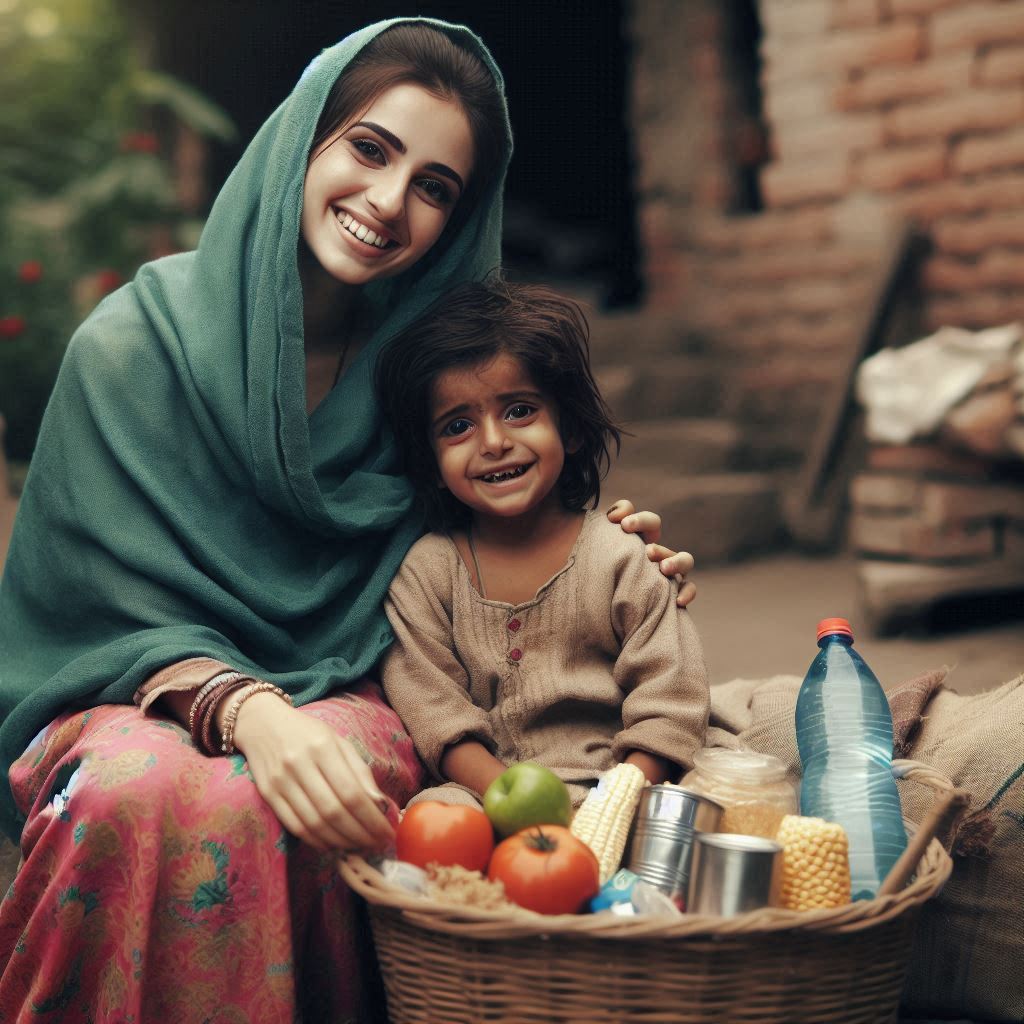
“The true measure of any society can be found in how it treats its most vulnerable members.”
Mahatma Gandhi
Image generated with Designer
“When you are harvesting your crops and forget to bring in a bundle of grain from your field, don’t go back to get it. Leave it for the foreigners, orphans, and widows. Then the Lord your God will bless you in all you do. When you beat the olives from your olive trees, don’t go over the boughs twice. Leave the remaining olives for the foreigners, orphans, and widows. When you gather the grapes in your vineyard, don’t glean the vines after they are picked. Leave the remaining grapes for the foreigners, orphans, and widows. Remember that you were slaves in the land of Egypt. That is why I am giving you this command.”
Deuteronomy 24:19-22 NLT
Foreigners, orphans and widows make up the greater percentage of the most disadvantaged and most vulnerable people in most societies. Politically, socially, economically and otherwise. They often lack any form of bargaining power. They only survive at the mercy of every other person and every other thing.
Mahatma Gandhi said that “the true measure of any society can be found in how it treats its most vulnerable members.” God didn’t leave the welfare of these vulnerable members of Israel’s society to the whims and caprices of their political and religious elite. He knows how unpredictable, and self-absorbed man can be. Instead of gambling on their epileptic goodwill, He enshrined it in a moral code for them.
Israel’s laws touch everything. Deuteronomy 24:19-22 tells us how it affects the most basic of human needs: food. A need whose deprivation strips man of all dignity very fast. God ensured that when it comes to something that basic, anyone living within the borders of Israel – a foreigner, an orphan or a poor widow, with no means of income and a house full of mouths to feed – would not go to bed hungry. That was the underlying philosophy. And God hasn’t changed at all in that regard.
The early church, for instance, had a food bank. In Acts 6, we have the story of a little administrative hiccup when some people complained that their widows were neglected in the way the food bank was managed. While they learned from that and grew administratively in managing a growing church, they had it right to ensure that no member of the church went to bed hungry. Indeed, the law, Deuteronomy 24:19-22 was written in their hearts as John said (1 John 2:27).
They did not need any special messages on giving and tithing. They so gave that those whose motivations were to the contrary thought that it was a competition, and tried to rig it. The Bible says that those who had, sold what they had and brought the proceeds to the leaders to share. “That there may be food in my house,” – so there would be provision for those who do not have (Mal. 3:10).
Throughout church history, we know of church communities that have lived in the same way. From the early church at Jerusalem through the Moravian Church (15th Century), the Anabaptists (16th Century) and the Shakers (18th-19th Century). These church communities are testaments to the fact that what the early church did is still possible. Utopian for our very complex world today? Perhaps! Nonetheless, that is still what God designed His church to be.
Some worldviews suggest that our world is overpopulated. There are conspiracy theories about some people scheming to cut down the population of the world to help the earth recuperate. I do not know how true that is, but what I do know, is that the God who created the earth and placed man here factored what we need to thrive here if we play by His book. The early church did it, some church communities down the ages have done it, and Deuteronomy 24:19-22 shows us that God intended it for the nation of Israel.
In addition to this social security package, note that the foreigner, the orphan and the widow might not need to beg, not for food, at least. And this is besides the provision from the tithes collected centrally (Deut. 14:26-27; 26:12-13).
As we encounter various categories of needy situations – the infirm, the destitute, the refugee, the widow, the orphan, etc. – we are however woken to the fact that as much as we desire to see such needs met, they are socioeconomic challenges that require political and legislative solutions. And that was what God had for Israel.
If I were the richest man in a community, I could only do as much as a man can do. A church organization can only go as far as they can afford. Though my gift and that of the church will help, particularly those close to us, especially in affirming and building an empathic and giving culture, a national initiative in the form of legislation will be the only near guarantee that the poor are not forever neglected. The rich and generous man will die someday. The socially sensitive church and organization may go out of business for some reason. A law however will last a bit longer.
As I begin to wrap up, we come back to me and you. The story of Ruth, Naomi and Boaz (Ruth 1 – 4) illustrates God’s heart for us. Ruth and her mother-in-law were widows who had no means of income. Though destitute, Naomi knew that there was a law in Israel that would at least ensure that they would not starve. As they took advantage of that, Boaz took notice of Ruth. He told his workers to leave some sheaves to fall intentionally for Ruth to pick up (2:16). Earlier he had instructed them to “Let her glean even among the sheaves, and put her not to shame” (2:15).
Boaz displayed such intentionality that says, as much as it lies in my powers, this woman and her mother-in-law must not stay destitute and vulnerable. An intentionality that says, nobody around me should be shamed or stripped of their dignity because of food, or go to bed hungry, if I can help it. Beautifully there was a law in place that both prompted and enabled him.
An intentionality that says, nobody around me should be shamed or stripped of their dignity because of food, or go to bed hungry, if I can help it.
Therefore, whether at home, at the office or in the larger society, as I sign off, I ask myself:
- How can I ensure that the person besides me does not stay deprived, if I can help it?
- How empathic am I towards the people God has put around me?
- What will it mean for me not to glean the vines after they have been picked?
- What will Boaz’s men letting some sheaves fall on purpose for Ruth look like for me in my business?
- How will I comport myself to preserve the dignity of the vulnerable around me?


 Studio52Seven
Leave a reply to Chi Adeliyi Cancel reply